 Loreweaver
✦ Guides
How to build a ranger: the one who knows the way, levels 1 to 5 and beyond
Updated: 2026-06-23
Who the ranger is at the table
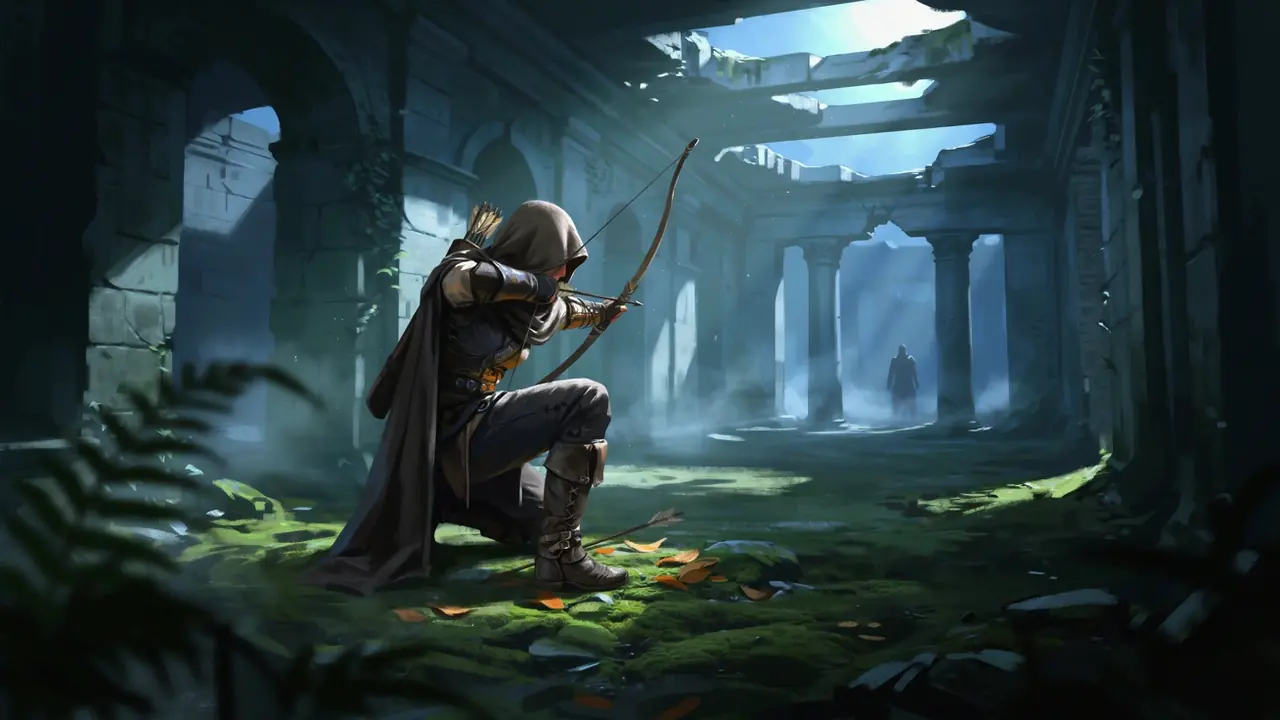
Every adventuring party is, structurally, a group of people out of their depth. The ranger is the one who isn't. Not the strongest hand or the loudest voice: the one who knows which ford is passable in spring, what made those tracks and how long ago, and which silence in a forest means birds and which means something has already seen you. The class is a bet that expertise about the world is worth as much as power over it, and the sheet backs the bet: three skill picks where most martials get two, drawn from a menu (Perception, Survival, Stealth, Nature, Investigation, Insight, Animal Handling, Athletics) that reads like a field guide's contents page.
The archetypes are anyone whose knowledge was paid for in miles. A caravan warden who has buried enough clients to price every shortcut honestly. A bounty tracker who learned her quarry's language because you cannot hunt what you refuse to understand. A dwarf who walked the deep roads for thirty years and knows which tunnels breathe. The wilderness isn't their enemy or their friend; it's their subject.
The kit underneath is quietly martial: a d10 hit die, medium armour and shields, all weapons, Strength and Dexterity saves. Loreweaver's starting loadout is a longbow, leather armour, and a shortsword, and from level 2 a thin, practical seam of magic runs through it all, cast off Wisdom: the ranger's spells are field knowledge that got tired of asking permission.
The choices that matter, level by level
Level 1 sets the ability order (Dexterity first for the bow and the leather, Wisdom second for the spells to come and half your skill list, Constitution third) and grants the two features people most often misread. Favored Enemy gives you advantage on Survival checks to track your chosen kind of creature and on Intelligence checks to recall what's known about them, plus one of their languages; more picks come at 6 and 14. Natural Explorer marks a favored terrain where your whole group moves unslowed by difficult ground, you can't get lost except by magic, and you stay alert even while foraging; more terrains follow at 6 and 10. Read those again: neither adds a point of damage. They're the mechanical spine of knowing things: campaign-defining or dead weight depending on whether you pick what the story is about.
Level 2 brings a Fighting Style (Archery's +2 to ranged attack rolls is the plain best friend a longbow ever had, with Defense, Dueling, and Two-Weapon Fighting serving the melee shapes) and the first spells. Note the fine print: the ranger is a known caster, not a prepared one. You learn two spells at level 2 and know only four by level 5, so each pick is close to permanent. Hunter's Mark is the signature, but Goodberry, Cure Wounds, and Fog Cloud are all arguments worth having with yourself.
Level 3 is the conclave, and the one Loreweaver builds today is the Hunter: the ranger distilled to technique. It opens with a genuine choice, Hunter's Prey: Colossus Slayer (an extra 1d8 once per turn against anything already wounded; the reliable pick), Giant Killer (a reaction attack when a Large or bigger creature swings at you up close), or Horde Breaker (a second attack against a different creature beside your first target). Primeval Awareness arrives the same level: burn a spell slot to sense whole categories of monster within a mile, six in your favored terrain. Level 4 is the first Ability Score Improvement, and +2 Dexterity is rarely wrong. Level 5 pays out twice: Extra Attack, and 2nd-level slots carrying Pass Without Trace and Spike Growth, the class's two best tricks for deciding where a fight happens and whether it happens at all.
Three build sketches
The warden of the long road. A wood elf who has walked the same trade route for sixty years and considers every traveller on it, however briefly, hers. Wood elf is the archer's chassis: +2 Dexterity, +1 Wisdom, 35 feet of speed, and Mask of the Wild for hiding in light natural cover. Outlander adds Athletics and Survival. Take Archery at 2, Colossus Slayer at 3, and Hunter's Mark early: by level 5 she's making two longbow attacks a turn at +2 to hit, with a d8 and a d6 riding along: arithmetic dressed as patience.
The manhunter. A human ex-soldier who tracks deserters and worse for whoever holds the warrant. Human's +1 across the board suits a build that wants Dexterity, Wisdom, and Constitution all working; Soldier brings Athletics, Intimidation, and a rank that opens garrison doors. Two-Weapon Fighting at 2 adds his ability modifier to the off-hand blade, and Horde Breaker at 3 means anyone standing beside his mark is also having a bad day. Favored enemy: humanoids of whatever nation writes the warrants.
The deep-road keeper. A hill dwarf who maintains the tunnel routes between holds: part surveyor, part exterminator. Hill dwarf trades speed for permanence: +2 Constitution, +1 Wisdom, and Dwarven Toughness's bonus hit point every level on top of the d10. Guild Artisan fits a keeper of infrastructure, adding Insight and Persuasion for the toll disputes. Dueling plus a shield makes a compact fighting shape for corridors, and Giant Killer is aimed squarely at the oversized things that dig where they shouldn't. His favored terrain is underground, where Primeval Awareness reaches six miles; nothing moves in the deep roads without him knowing.
Common traps
The first trap is picking Favored Enemy like it's a damage feature. It grants tracking advantage, recall advantage, and a language (knowledge, not violence), so a pick that ignores the campaign is a blank line on the sheet. Ask your DM what the region's actual problem is, or pick the creature your backstory already hates. The feature is a promise the table makes together: this kind of story will matter.
The second trap is spending known spells like a prepared caster. A druid can swap a dud choice tomorrow morning; you'll carry yours for levels. Four spells known at level 5 means every slot in the list earns tenure, and concentration tightens it further: Hunter's Mark, Fog Cloud, and Spike Growth all demand it, and only one can be up at a time. Before learning a second concentration spell, ask what your bow hand is doing while it runs.
The third trap is refusing to specialise. The ranger's proficiencies flatter every fantasy at once (all weapons, shields, Strength saves), and the trap is building for all of them: an archer who also duels, split between Strength and Dexterity, excellent at neither. Pick the silhouette at level 1, fund it with your best score, and let the Fighting Style and Hunter's Prey choices agree with it. Versatility is what the skill list is for; the attack routine should be a specialist.
Taking it past level 5
The Hunter's later arc is unusual among subclasses: instead of fixed features, it keeps handing you choices. Defensive Tactics at 7 (disadvantage on opportunity attacks against you, +4 AC against a creature's follow-up swings, or advantage against fright), Multiattack at 11 (Volley raining an attack on every target near a point, or Whirlwind Attack striking everyone in reach), and Superior Hunter's Defense at 15, where Evasion, Uncanny Dodge, or the gleefully political Stand Against the Tide (a missed melee attack gets redirected at a neighbour of your choosing) round out the technique. The base class deepens the woodcraft in parallel: extra favored enemies and terrains at 6, 10, and 14, Land's Stride at 8, Hide in Plain Sight's +10 to Stealth at 10, Vanish at 14 making you bonus-action-hideable and untrackable, Feral Senses at 18 ending the tyranny of the unseen attacker. Foe Slayer at 20 closes the loop: your Wisdom modifier, the knowing stat, added once a turn to an attack or damage roll against a favored enemy. Understanding something completely, the class concludes, is indistinguishable from power over it.